High-Temperature and Liquid-Mixed Silicone Rubber Industry News
Time:2025-08-08 12:32:20 / Hits:
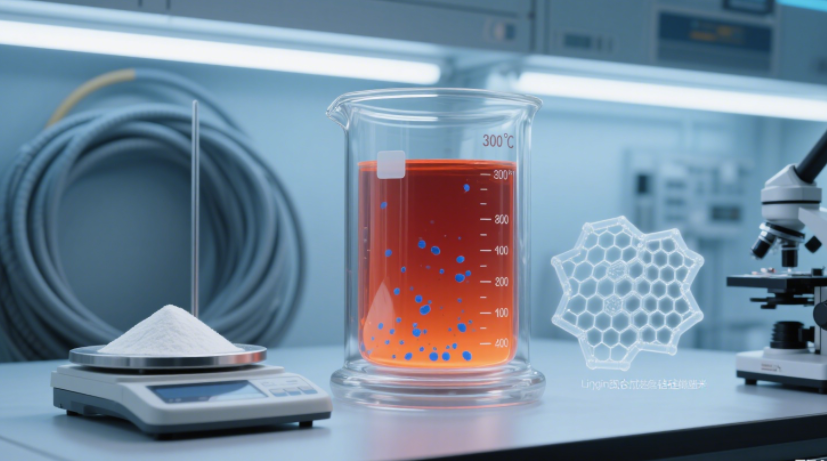
Recently, the high-temperature and liquid-mixed silicone rubber industry has seen both achievements and challenges. According to information from the National Intellectual Property Administration, in June 2025, Jiangsu DIC New Materials Co., Ltd. applied for a patent titled “A Type of Addition-Curing Flame-Retardant High-Temperature-Resistant Silicone Rubber and Its Preparation Method” (publication number CN120399457A). This patent achieves enhanced flame-retardant properties while significantly improving high-temperature resistance through specific raw material ratios. It is expected to excel in applications such as lightweight products in the new energy special cable harness sector, meeting the stringent performance requirements of relevant fields. Concurrently, Jiangsu DIC also applied for a patent titled “A High-Temperature-Resistant Compounded Silicone Rubber and Its Preparation Method” (Publication Number CN120442061A). This patent leverages the synergistic effects of rigid groups, cross-linked network structures, and lignin-modified silica nanoparticles to significantly reduce main-chain degradation reactions at high temperatures, imparting superior thermal stability to the product. Even after high-temperature processing, the product maintains excellent mechanical properties, offering broad application prospects.
From a market perspective, the organic silicon market appeared calm in August, but underlying currents were at play. Industrial silicon futures prices recently experienced a correction, with the main contract 2509 closing at 8,760 yuan on July 31, down 585 yuan from the previous period. Although there is an expectation of a slight increase in downstream demand for industrial silicon, the improvement in the terminal market remains limited, which has dampened the procurement enthusiasm of compounding rubber companies. The precipitated silica market remains weak, while the production capacity of fumed silica companies remains stable with ample supply. However, the lackluster demand for silicone rubber has led to low acceptance of price increases among downstream buyers. Nevertheless, fluctuations in some raw material prices have added uncertainty to the market. For example, this week, the average price of organosilicon products showed a slight downward trend in some regions. The mainstream quotation for DMC was between 11,800 and 12,700 yuan per ton, with some prices fluctuating by 100 to 500 yuan; the price of 107 rubber saw a narrow downward adjustment, with the mainstream transaction price ranging from 13,200 to 13,500 yuan per ton; Raw rubber prices are at 13,500–13,700 yuan per ton, with stable pricing and pre-sale order trends continuing; silicone oil prices are at 14,500–14,700 yuan per ton, with downstream buyers currently purchasing on an as-needed basis during the off-season.
Notably, the industry's competitive landscape and production capacity dynamics are also undergoing changes. The five major organosilicon giants—Zhejiang Xinan, Shandong Dongyue, Inner Mongolia Hengyeceng, Hubei Xingfa, and Tangshan Sanyou—simultaneously suspended trading, with both raw rubber and 107 rubber ceasing to quote prices, plunging the market into a “no price, no market” state. Four monomer plants in Shandong, Zhejiang, and Xinjiang are undergoing concentrated maintenance, involving over 1 million tons of production capacity. The maintenance period has not yet been determined, directly leading to a sharp drop in industry operating rates. Currently, only one factory in Shandong maintains a quotation of 12,300 yuan per ton, while all other manufacturers have suspended trading. Market panic is spreading, and DMC spot prices have surged accordingly, with mainstream transaction prices exceeding 12,700 yuan per ton, a sharp increase of 500 yuan per ton compared to last week. More critically, production schedules for core products like HeSheng synthetic rubber have been extended to the end of August, with supply shortages intensifying. The “scarce supply” situation may further deteriorate. This sudden development exposes the industry's underlying structural risks. The violent rebound in industrial silicon futures by nearly 2,000 yuan has cascaded cost pressures throughout the entire supply chain. Despite the current appearance of rising prices and full order books in the organosilicon market, terminal demand has yet to truly recover. The industry urgently requires a demand revolution to break the current deadlock.
In summary, the high-temperature and liquid-mixed silicone rubber industry demonstrates strong momentum in technological innovation, with continuous new achievements emerging to chart new directions for industry development. However, the market faces numerous challenges, including raw material price fluctuations, weak demand, and sudden changes in production capacity dynamics, all of which impose significant operational pressures on enterprises. Nevertheless, the industry continues to inject vitality into future development through sustained technological innovation and the expansion of application boundaries, making its future trajectory worth ongoing attention.


